



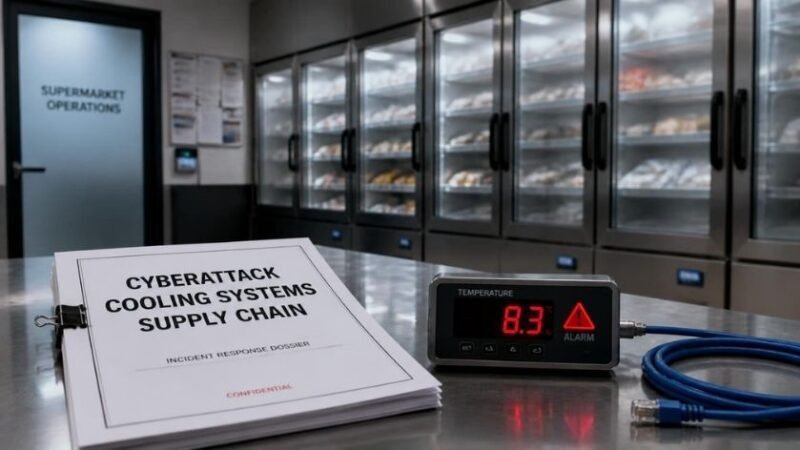
Hundreds of supermarkets across France have fallen victim to a highly disruptive and costly cyberattack targeting their operational technology (OT) systems. The incident specifically compromised the cooling and refrigeration infrastructure in stores belonging to major chains such as Intermarché, Leclerc, and Coopérative U.
According to reports, cybercriminals successfully breached the remote management systems of the cooling units, which were supplied by the Danish manufacturer Danfoss. Once inside, the attackers intentionally manipulated the settings, raising the temperatures of the commercial freezers and refrigerators to 50 degrees Celsius.
The sabotage led to catastrophic food spoilage, with preliminary estimates suggesting that the financial damages could run into the millions of euros. Authorities and cybersecurity experts indicate that the attackers likely exploited unpatched, outdated versions of the control software to gain unauthorized access to the systems.
This alarming incident highlights the growing physical risks associated with connected IoT devices and industrial control systems in the retail supply chain. It underscores the critical need for strict network segmentation, ensuring that operational technology is isolated from the broader internet and protected by rigorous access controls.
Under emerging frameworks like the NIS2 Directive, large retail and distribution organizations are increasingly held accountable for the cybersecurity of their entire supply chain, making proactive risk management and continuous system updates essential for survival.
Read ladepeche.fr article for more information.